To contact us in Montreal / Pour contacter l’équipe montréalaise
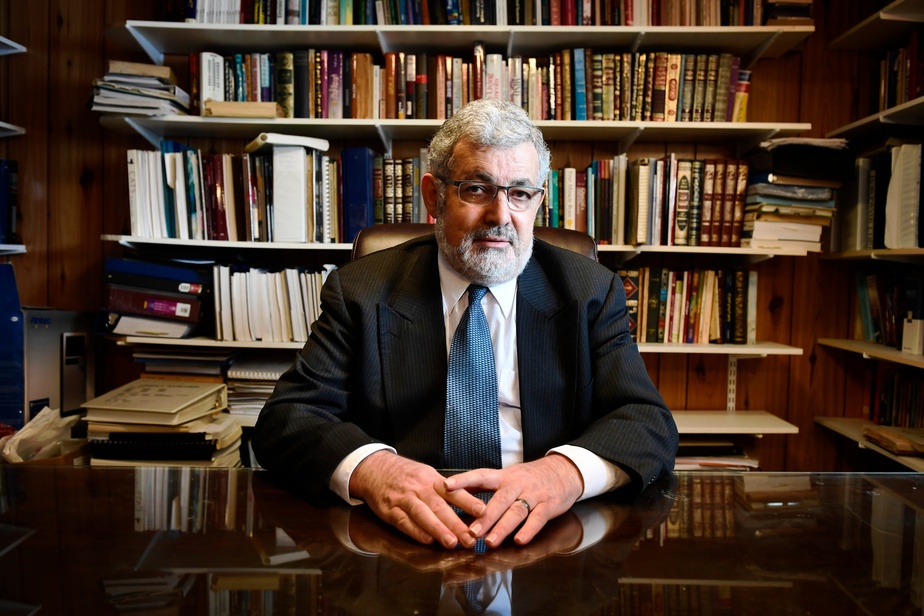
Scott Weinstein: Letter to the Editor
National Post Published:March 04, 2010
Israeli Apartheid Week:
It is remarkable what speed politicians can change their tune, and what speed their past can be uncovered. Michael Ignatieff recently condemned Israeli Apartheid Week, but here is what the Liberal leader previously wrote in The Guardian on April 19, 2002:“When I looked down at the West Bank, at the settlements like Crusader forts occupying the high ground, at the Israeli security cordon along the Jordan river closing off the Palestinian lands from Jordan, I knew I was not looking down at a state or the beginnings of one, but at a Bantustan, one of those pseudo-states created in the dying years of apartheid to keep the African population under control.”
The quote by Michael Ignatieff on Israel is still up on The Guardian’s website
Scott Weinstein, Montreal.
Écouter le reportage de Marie-France Abastado- émission “Dimanche magazine” sur Radio-Canada, du13′09′09 : www.radio-canada
Écrite par l’auteure britannique Caryl Churchill en réponse à la situation dramatique qui prévalait à Gaza en janvier dernier, la pièce a été produite pour la première fois à Londres le 6 février 2009. Elle est reprise depuis lors un peu partout sur la planète, suscitant énormément d’intérêt, autant du point de vue artistique que social. Un public restreint avait eu l’occasion d’assister à sa représentation à Montréal, au début de mai, à l’Espace Geordie, où une première lecture avait été faite en français, dans une traduction de Jocelyne Doray.
Sept enfants juifs : du passé vers l’avenir, quelles responsabilités portons-nous ?
« Dix minutes de radio pour Sept enfants juifs. Dix minutes de radio pour sortir de nos sempiternels problèmes et s’ouvrir à ceux d’Israël et de Gaza. Dix minutes de radio pour une pièce engagée et bouleversante. Qui dit mieux? », voilà comment se terminait l’article Dix minutes pour Gaza de Nathalie Petrovsky dans «La Presse» du 9 mai 2009. Elle déplorait que la pièce Sept enfants juifs de la dramaturge britannique Caryll Churchill ait été diffusée à Montréal presque « confidentiellement ». Moins d’un mois plus tard, le 6 mai, la Fondation Charles-Gagnon, en collaboration avec Voix juives indépendantes présentait cette pièce mise en scène par Stéphane Jaques dans le cadre de sa journée sur l’art engagé. Et ce n’était qu’un début!
Ce n’est pas un hasard si cette pièce a été écrite et diffusée au moment où l’invasion d’Israël dans Gaza remuait les populations à travers le monde. Elle soulève la question de la mémoire et de ce qu’on en fait. On ressort de la représentation bouleversé et aux prises avec des émotions partagées par rapport aux horreurs qui se perpétuent – notamment l’incursion soutenue de colons israéliens en Palestine qui suivent, encore de nombreuses années plus tard, les horreurs subies par les Juifs au cours de la deuxième guerre mondiale. Plus encore, c’est le déchirement que connaissent les parents entre faire œuvre de mémoire en racontant à leurs enfants les pires horreurs du passé ou au contraire les préserver et en quelque sorte enfouir le passé. Existe-t-il une réponse simple ? Bien sûr que non !
Les échanges qui ont immédiatement suivi la représentation à laquelle j’ai assisté à Montréal confirment que ce dilemme est encore vivant pour plusieurs personnes, non seulement en ce qui concerne le thème directement abordé dans la pièce mais relativement à tout héritage du passé. Comment se souvenir mais sans s’alourdir avec des désirs de vengeance ?
Au delà des interrogations précises que cette pièce suscite dans le contexte actuel concernant Israël et de ses politiques – voire les politiques canadiennes -, elle entraîne inévitablement les spectatrices et les spectateurs à réfléchir sur la manière dont le passé s’imprime en chacune, chacun d’entre nous et sur l’usage qu’on en fait. Que l’on choisisse «de dire ou de ne pas dire», «de se raccrocher au passé ou de le dépasser pour construire», l’enjeu de la responsabilité par rapport à la mémoire se pose. C’est l’une des raisons qui amène le Comité Québec/Canada de la Charte des responsabilités humaines à s’associer, en collaboration avec l’équipe montréalaise de Voix juives indépendantes, à l’initiative de diffuser plus largement cette production théâtrale d’abord au Québec, puis éventuellement ailleurs.
À noter que la pièce a été diffusé dans plusieurs villes déjà et est visible dans différentes versions sur YouTube, dont celle du Royal Court theatre de London.
Fighting the CJA censorship of Jeff Halper
January 12, 2009

Montreal, Quebec
Federation Combined Jewish Appeal / Gelber Centre
Mark Gold, President, Federation CJADear Mr. Gold,
Your last minute decision to prevent our scheduled public presentation, by Jeff Halper, Israeli
peace activist and Nobel Peace Prize nominee titled “Peace in Israel? Peace with Gaza? Yes We Can!” to the Jewish community on Thursday, January 15 at the Gelber Centre is most disturbing and unnecessary.It is difficult to interpret your decision to ban the presentation by the Jewish Nobel Peace Prize nominee as other than an act of political censorship, something surely not in the tradition of the CJA.
We object strongly to your decision, and question the validity of your stated excuse that the cancellation is due to “security concerns” presented by the negative reaction from another group called Les amis d’Israel. You do not cite any threat by them, and if a threat is evident, then the police should be notified. We have had many experiences organizing these kinds of events and there have never been any security issues at our presentations, (including those at the Gelber Centre). As we have always, we can guarantee our presentation will be respectful and calm.
While we seriously doubt this explanation, we also object to your refusal to consider our request to facilitate a joint meeting with Les amis d’Israel (we do not know who they are) and the FCJA to ensure a mutually satisfactory outcome. In fact, we would be most pleased if you would actually facilitate a joint debate with them that evening at the Gelber Centre. That would be a proud event for the Jewish community, one that would demonstrate that it is not afraid of differing opinions and views.
Censorship of speech and opinions within the Jewish community is a grave act – an assault on our long history of supporting intellectual debate and diverse opinions. The Jewish community thrives because of our intellectual courage and opinions; Democracy and freedom are best served by an educated public able to make informed decisions. Censorship kills democracy, and serves autocratic ends that are deleterious to Jews.
The group Independent Jewish Voices exists precisely to ensure that the Jewish community can have healthy exchanges and debates on critical issues facing us without political censorship or accusations of disloyalty.
We know Jews have a large range of opinions about Israel, Palestine, Zionism, and the Middle East, and we would have expected you to be open to the respectful airing of these. It is most disheartening that the self-appointed leadership, represented by the FCJA, is demonstrating distrust of Jewish people. By imposing political censorship on a presentation that addresses the crisis in Israel and Gaza, the FCJA shows that it fears hearing the full range of these opinions when they may include peace messages from a non-violent Jewish-Israeli Nobel Prize nominee that may counter the public positions of the FCJA.
Thus, we hereby request that you reverse your decision and allow the scheduled presentation to proceed unhindered. To this end, we are prepared to discuss a mutually satisfactory resolution to this last minute crisis with you as soon as possible.
Respectfully,
Scott Weinstein, On behalf of Independent Jewish Voices Montreal
Independent Jewish Voices letter to Prime Minister Harper
- Dear Prime Minister Harper.
We read with dismay and sadness the report of your remarks in the Montreal Gazette with regard to those who criticize the State of Israel. As Jews, and as Canadians, we are deeply offended by your allegations that objections to Israeli policies that include the occupation, forced eviction, and denial of human rights to Palestinians living in Gaza and the West Bank — as well as discrimination against the many Palestinians living in Israel — are signals of “anti-Semitism.”
To the contrary, these objections are rooted in the many Jewish struggles for justice and democracy throughout history, and reflect the contributions made by many Jews around the world for the respect of human rights. Thus, we are troubled that you, as Prime Minister of Canada, chose not to recognize the multiplicity of Jewish voices and positions, both in Canada and in Israel. It is our history of dissent, constructive criticism, and community action that has helped build Canada. Our ability to address not only Jewish concerns but also those of our fellow citizens stems from the painful memories of how silence was used against us.
Dissent is not something we take lightly – whether in Israel, Canada, or elsewhere. To equate the “criticism of the state of Israel as similar to the attitude of Nazi Germany” is slanderous!
As members of Independent Jewish Voices (Montreal) we demand that you retract your statements: they reflect the type of overwhelming misunderstanding and lack of knowledge of Jewish cultures and histories that continues to contribute to racism against Jews. Moreover, we demand that you make a public apology to all of us — Jews and non-Jews alike — who take their role as citizens conscientiously.
Sincerely,
Independent Jewish Voices (Montréal)
_________________________________
Ehab Lotoyef and IJV Montreal engage in a little theatre at the 2008 Israel Day parade. (photo Mary Ellen Davis)
——————————————————————————-
Stephane Dion dances the Horah at the annual march celebrating Israeli independence. photo: Allen McInnis, The Gazette
The flag she grabbed from the cardboard box marked “Made in China” was white and blue, but it wasn’t the Magen David. It was the Fleurdelisé, and, disappointed, the teenage student from a Jewish day school chucked it to the ground. “I don’t want this one!” she exclaimed to her friends.
And for several minutes Thursday morning, the flag lay there, crumbled and trod upon by the oblivious students milling around the monument to King Edward VII in Phillips Square.
It was the start of the annual march for Israel Independence Day. And on the blustery 60th anniversary of the founding of the Jewish state, flags symbolized everything.
The pride of belonging – to Israel and to Canada – could be heard and felt in the snap of every one. And there were thousands.
Almost everyone in the crowd – between 16,000 and 20,000 people, organizers claimed – carried or wore as a cape the Israeli flag: a blue Shield of David on a white background, bordered top and bottom by blue stripes symbolizing a Jewish prayer shawl.
Some also held aloft the Canadian flag, the red-and-white Maple Leaf.
But rare was the sight of the Quebec Fleurdelisé, with its big white cross and its four white fleurs-de-lis on blue in each corner.
And nowhere, of course, was the black, white, green and red flag of that other non-country, Palestine.
That flag was adopted in Gaza in 1948 after the Arab League rejected the United Nations partition of British Mandate Palestine into a Jewish and a Palestinian state and began a year-long war against the fledgling Israeli nation.
“What I find sad is, if the Arabs had accepted the UN declaration back then, today we’d be celebrating two states, not just one,” said Ernest Sinyor, an Egyptian-born Jew and retired engineer who carried the Canadian flag beside his wife, who had the Magen David.
Together with their daughter they watched the lunchtime rally at Place du Canada, where federal, provincial and municipal politicians danced the hora, the traditional Zionist circle dance, to songs performed by musicians from the Israeli cities of Beersheba and Sderot.
In separate speeches, Conservative cabinet minister Stockwell Day and federal Liberal leader Stéphane Dion drew a link between Canadian and Israeli nationalism.
“As fellow Canadians, we can all take pride in the pivotal role Canada played in crafting the United Nations revo- … resolution that led to this defining moment in history” in 1948, said Day, Canada’s public safety minister, reading a message from Prime Minister Stephen Harper, who is to visit Israel next month.
But to reporters, Day distanced himself from a statement by Israel’s ambassador to Canada, Alan Baker, that Canada’s burgeoning Muslim population might be eroding Ottawa’s longtime support for Israel.
“We are a multicultural nation,” Day said.
“We are proud of the fact we are made up and are built of people who have come here from all countries, including the Jewish people. They celebrate the fact we are a multicultural nation, we celebrate that, and we want to see peace in Canada and around the world.”
Dion told the crowd: “There are thousands of us in Montreal today and millions across Canada who are celebrating our friendship with Israel. Sixty years is young in the life of a people, but so much is left for us to accomplish for the cause of peace.”
Under Montreal police protection across from the park, several dozen ultra-orthodox Jews wearing sackcloth as a sign of mourning lamented the existence of Israel, while a group of pro-Palestinian demonstrators lamented the lack of a Palestinian state.
“The message is, not all Jews believe in ‘Israel, right or wrong,’ ” said Scott Weinstein, an organizer with Independent Jewish Voices – Montreal.
“Don’t think of us as a monolithic voice, and don’t be afraid to criticize Israel. We’re Jewish Canadians, and we criticize Canada, too. We’re not disloyal to Canada. It’s patriotic to have a voice for peace and justice.”
Leaving the park at the end of the rally, the Malka family of Côte St. Luc reflected, too, on the notion of patriotism.
“It’s Israel’s 60th birthday, and it’s really important to support our country,” said Anael Malka, 12, who attends Hebrew Academy.
Added her mother, Celine: “It’s the only country we’ve got.”
© Montreal Gazette 2008